





















NJ Ayuk and the African Energy Chamber Reveal How the Digital Boom Could Finally Stabilize Africa’s Energy Grid
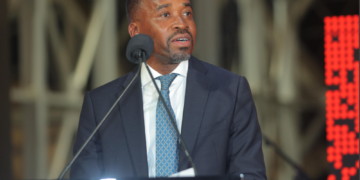
As we move into 2026, a new anchor is emerging for Africa’s energy infrastructure: the Data Center. According to NJ Ayuk, Executive Chairman of the African Energy Chamber (AEC), the skyrocketing demand for localized computing power is no longer just a digital necessity; it is the financial spark required to modernize Africa’s aging power grids.
With smartphone adoption in Sub-Saharan Africa projected to hit 87% by 2030 and AI applications consuming up to 10 times more energy than traditional searches, the continent is facing a massive computing load that its current grids cannot support. However, this crisis presents a $6.8 billion opportunity.
The AEC’s State of African Energy: 2026 Outlook Report highlights a massive growth trajectory for the sector as nations push for data sovereignty and lower latency.
| Metric | 2024/2025 Status | 2030 Projection | Growth Rate (CAGR) |
| Market Value | $3.49 Billion | $6.81 Billion | 11.79% |
| Power Capacity | ~400 MW | 2,000 MW (2 GW) | 9.0% |
| Smartphone Adoption | 51% | 87% | — |
| Data Usage | 4.6 GB/user | 18 GB/user | — |
The primary obstacle to African electrification has long been the lack of predictable demand that makes large-scale projects attractive to investors. Data centers change this math:
- Steady Offtake: Unlike residential demand, which fluctuates, data centers require a 24/7 constant load, acting as a stabilizer for the grid.
- Socially Responsible Capital: Investors are more likely to fund power plants when they are paired with high-tech, job-creating digital hubs.
- Infrastructure Synergy: To secure their own uptime, data center operators often build their own dedicated power lines and renewable farms, which can eventually feed surplus power back into the public grid.
Currently, 41% of Africa’s data center infrastructure is concentrated in just three countries, each facing unique energy challenges:
- South Africa (56 Centers): Leading the continent in solar integration. Projects like the 12 MW solar farm by Africa Data Centers are setting the standard for wheeling green energy through the grid.
- Kenya (19 Centers): A renewable powerhouse. Leveraging its geothermal resources, Kenya is hosting a 100 MW green data center backed by a $1 billion Microsoft and G42 investment.
- Nigeria (17 Centers): Facing the toughest climb. Despite having the third-most centers, the grid often provides only 4 hours of power per day, forcing a heavy and costly reliance on diesel generators.
“Building local data centers is a powerful step toward solving some of government’s most pressing problems: improving infrastructure, growing the economy, and strengthening national security.” — NJ Ayuk, AEC Executive Chairman
The report advocates for a balanced, multi-pronged approach. While Kenya proves the power of geothermal and South Africa masters solar, the AEC emphasizes that Natural Gas must serve as a bridge fuel. This ensures reliability when intermittent renewables fluctuate, providing the five nines (99.999%) uptime that the digital economy demands.