
























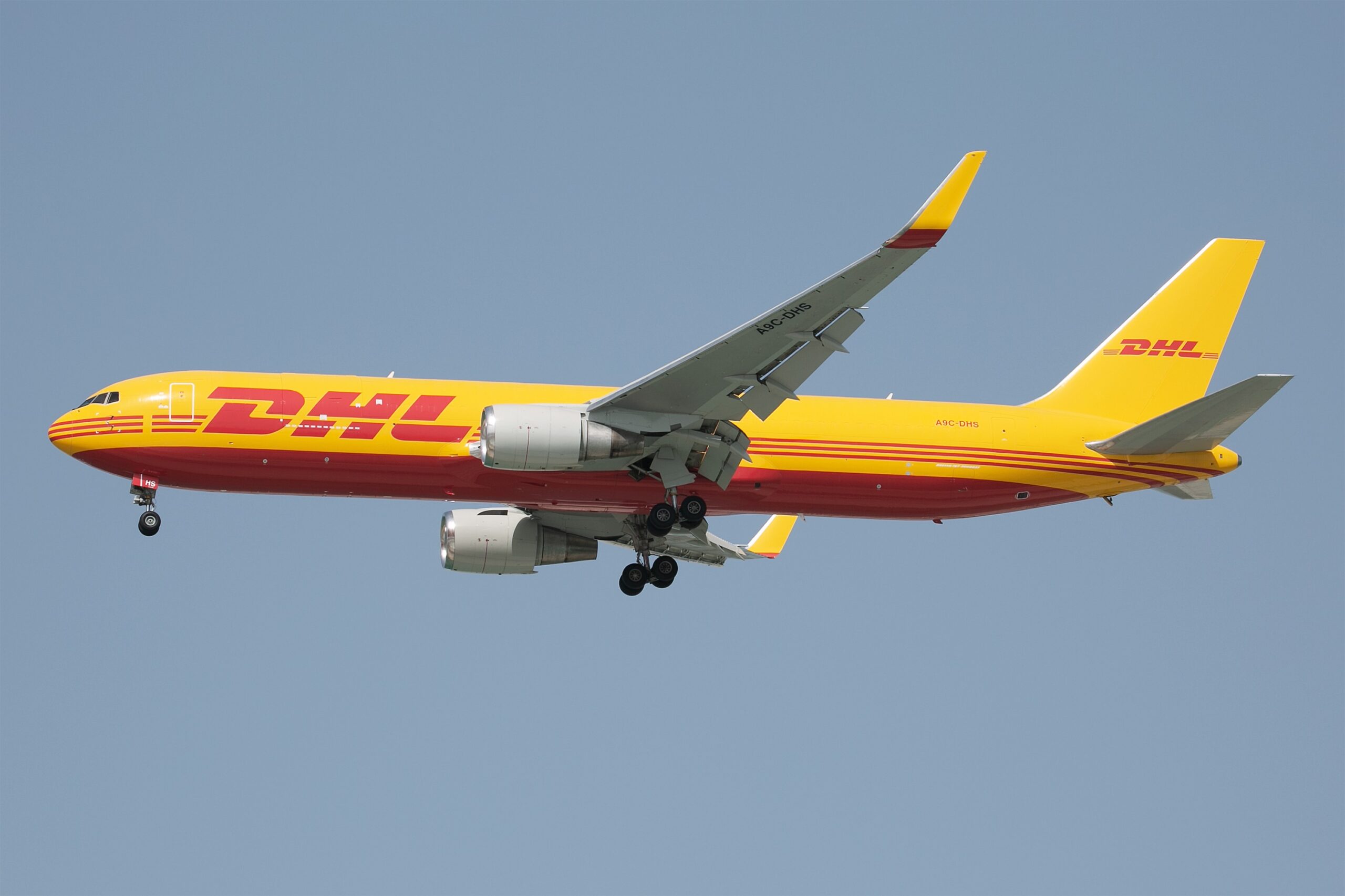
Strengthening Sub-Saharan logistics networks and supply chain resilience with dedicated weekly Boeing 767 freighter service.
DHL Express is doubling down on regional connectivity with a major milestone in its aviation network: the successful operation of the first-ever direct DHL flight between Bahrain and South Africa.
Touching down at OR Tambo International Airport in Johannesburg, the new weekly route—operated by a dedicated DHL Express B767/F freighter—is designed to boost heavier-weight capability, improve routing flexibility, and bridge the growing trade flows between Africa and the Gulf.
As modern supply chains shift away from traditional corridors and companies diversify their sourcing and manufacturing hubs, reliable logistics networks have never been more critical.
Bahrain serves as a strategic crossroads linking Africa, the Gulf, and major global gateways like Hong Kong, Leipzig, and Cincinnati. By routing through this vital hub, businesses across South Africa and neighboring countries gain faster, more direct access to international markets.
Key advantages of the new aviation lane include:
- Increased Capacity: Enhanced inbound and outbound cargo capacity through the DHL Johannesburg Hub to support fast-growing sectors like healthcare, technology, manufacturing, and e-commerce.
- Geographic Momentum: Tapping into South Africa’s role as a key market driving future trade growth across Sub-Saharan Africa.
- Exclusive Regional Network: Reinforcing DHL’s position as the only logistics provider operating a dedicated intra-regional air fleet connecting the Middle East directly to the African continent.
Anthony Beckley, Vice President of Operations and Aviation for DHL Express Sub-Saharan Africa, emphasized that the true value of the route lies in the economic opportunities it unlocks for customers navigating changing trade patterns.
Supported by strategic investments in aircraft capacity and hub infrastructure, DHL continues to pave the way for seamless international trade, ensuring businesses across Africa and the Middle East stay ahead of the curve.