
























A financially motivated breach in an AWS environment proves how agentic AI workflows act as a powerful force multiplier, compressing weeks of complex reconnaissance and lateral movement into a frantic three-day window.
The paradigm of cyber threat capabilities has shifted dramatically. Cyber readiness and response firm Sygnia has released striking initial findings from an investigation into an active, financially motivated cyberattack where a lone threat actor used artificial intelligence as a force multiplier to rapidly compromise a global enterprise’s cloud environment.
The investigation uncovered evidence of highly parallelized activity, custom scripts displaying telltale signs of AI generation, and blindingly fast environment-specific adaptation across AWS services. Rather than taking weeks to map an enterprise infrastructure, the attacker achieved broad cloud compromise in under 72 hours—operating at a speed and scale previously impossible for a single human operator.
Rather than leaning on rare zero-day exploits or novel malware strains, the threat actor utilized AI to orchestrate well-known cloud attack techniques across a wide surface area. The intrusion didn’t hinge on a single isolated misconfiguration; instead, it systematically chained together vulnerabilities spanning application services, AWS resources, source code repositories, CI/CD pipelines, runtime components, and data stores.
Simultaneously, the attacker executed rapid credential discovery, secrets harvesting, cloud enumeration, and database access.
“Cloud intrusions stemming from exposed secrets and weak identity controls are nothing new. What stood out in our investigation was the speed at which the attacker moved after gaining initial access and the sheer volume of malicious activity executed within a remarkably compressed timeframe,” said Avi Dayan, Vice President of Incident Response at Sygnia. “An attack that would have typically taken weeks to execute all happened under 72 hours.”
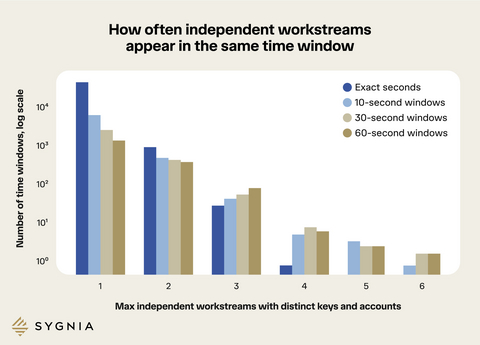
Instead of following a linear, step-by-step methodology, the intrusion unfolded simultaneously across multiple fronts. In one observed second, the attacker leveraged four different access keys across four separate accounts from the same source IP address, compressing actions that typically take hours into mere seconds.
Furthermore, the threat actor disguised their malicious footprints by labeling created artifacts with benign tags like pentest and red team. Within the data and application layers, the system executed hundreds of unique SQL queries and mapped complex cross-service dependencies in real time, demonstrating an adaptive intelligence capable of processing context far beyond traditional automated scripts.
This sophisticated breach highlights a grim reality for security teams: as large language models and agentic AI tools become widely available, they effectively lower the barrier to entry for resource-constrained or less sophisticated threat actors.
The findings heavily echo Sygnia’s CISO Survey 2026, which revealed that 73% of 600 senior IT security decision-makers surveyed do not feel fully prepared to defend against a serious cyberattack tomorrow. As adversaries adopt AI to compress the timeline of a breach to a matter of hours, enterprise defenders must evolve from reactive monitoring to real-time, automated operational resilience.