























By connecting CAD, PDM, and ERP systems into seamless, rule-based workflows, mechanical engineering firms are cutting order processing errors by over 30% and slashing custom variant design times by up to 90%.
A customer requests a slight variant of an existing product, sales commit to an aggressive delivery date, and the engineering department immediately drops its core development projects to search through PDM archives for a usable CAD model. Weeks pass while drawings are manually adjusted, dimensions are re-checked, and bills of materials (BOMs) are compiled by hand.
This frustrating lag, waiting weeks for a part that essentially already exists, is a daily reality for engineering teams across the manufacturing sector. Process automation is changing this narrative by replacing manual, error-prone individual tasks with predefined, automated, and repeatable digital workflows.
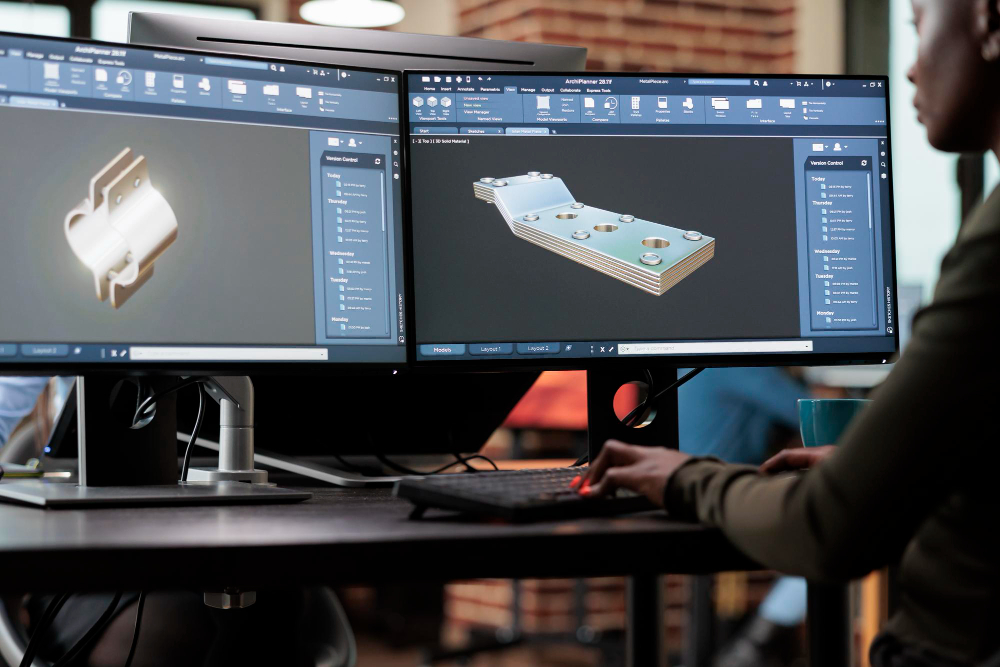
At its core, process automation in engineering serves as the bridge connecting standalone CAD, PDM, and ERP platforms into unified, end-to-end workflows. Solutions like Lino Automate allow teams to map recurring technical tasks, such as opening, editing, classifying, and saving technical files, using rule-based action lists without needing custom code.
A simple trigger, such as clicking a button or changing an event status in a PDM system, launches an entire chain of events:
- Processing and modifying CAD data in the background.
- Generating updated metadata and documentation.
- Initiating downstream procurement and manufacturing processes in the ERP system.
Firms leveraging Lino’s process automation report 25% to 50% shorter overall throughput times and a more than 30% reduction in order processing errors.
A primary application of this automation is configuration management via Tacton Design Automation. Built around a single master model inside the CAD environment (such as SOLIDWORKS or Autodesk Inventor), the system stores all permissible dimensions, components, and design rules.
When a custom variant is requested, sales or engineering personnel simply input required attributes via dropdowns, sliders, or input fields. The underlying configuration engine manages dependencies in real time:
In a demonstration featuring a hand-operated arbor press, selecting a higher required pressing force instantly recalculates required machine dimensions, restricts spindle choices to valid sizes, and automatically replaces the standard base plate with an enlarged version featuring clamping grooves, all without requiring manual component selection by the user.
Because every variant is derived dynamically from an error-free master model, technical validity is mathematically guaranteed across every single build.
Manual drawing creation is historically one of the most time-consuming bottlenecks in variant design. With automated configuration tools complemented by modules like Lino 2D fix, production drawings, views, dimensions, and BOM callouts update automatically whenever the underlying model changes. Scales adjust intelligently, and views are arranged to prevent overlapping. A supplier in the door manufacturing sector reported a 90% time savings in variant design after implementing automated drawing generation.
Solutions like Lino Automate PDM completely remove the manual burden of document management. Instead of an engineer manually opening files, typing part numbers, checking metadata, and checking documents back into the PDM vault, the system executes these routines silently in the background.
By eliminating the need for constant human supervision during file processing, waiting time drops to virtually zero, allowing engineers to immediately move on to high-value innovation rather than babysitting administrative routines.