
























11 Industry Leaders Put to the Test: Why Standard Protection is No Longer Enough in a Mobile-First Threat Landscape
The AV-TEST Institute has released its latest deep-dive into the Android security market, putting 11 of the world’s most prominent mobile security apps through a rigorous gauntlet of realistic threat scenarios. Covering Protection, Performance, Usability, and Features, the March 2026 results provide a vital benchmark for both home users and enterprise leaders managing a Bring Your Own Device (BYOD) workforce.
In an era where mobile malware is becoming increasingly sophisticated, these tests serve as the ultimate stress test for the apps we trust to guard our digital lives.
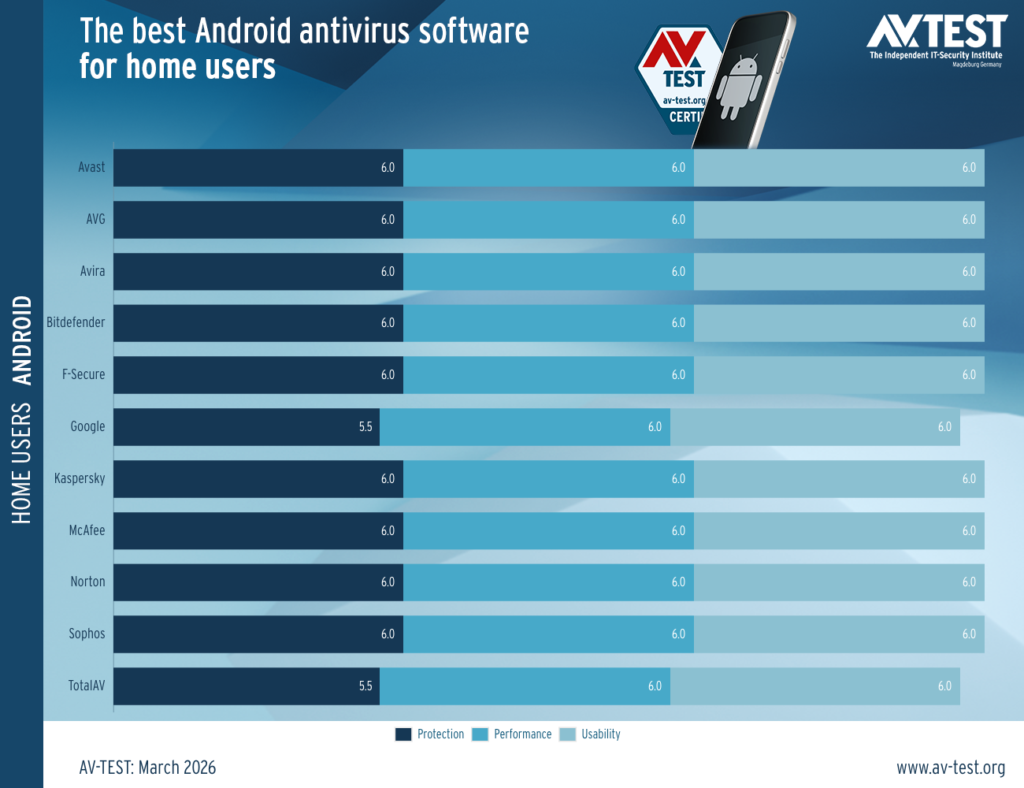
The AV-TEST methodology focuses on four non-negotiable metrics that define the quality of a mobile security suite:
- Protection: Ability to identify and neutralize both in-the-wild malware and zero-day threats.
- Performance: The impact on battery life and system speed (crucial for maintaining user productivity).
- Usability: Ensuring that security doesn’t become a nuisance through false positives or intrusive interfaces.
- Features: The extras that add value, such as VPNs, anti-theft tools, and identity monitoring.
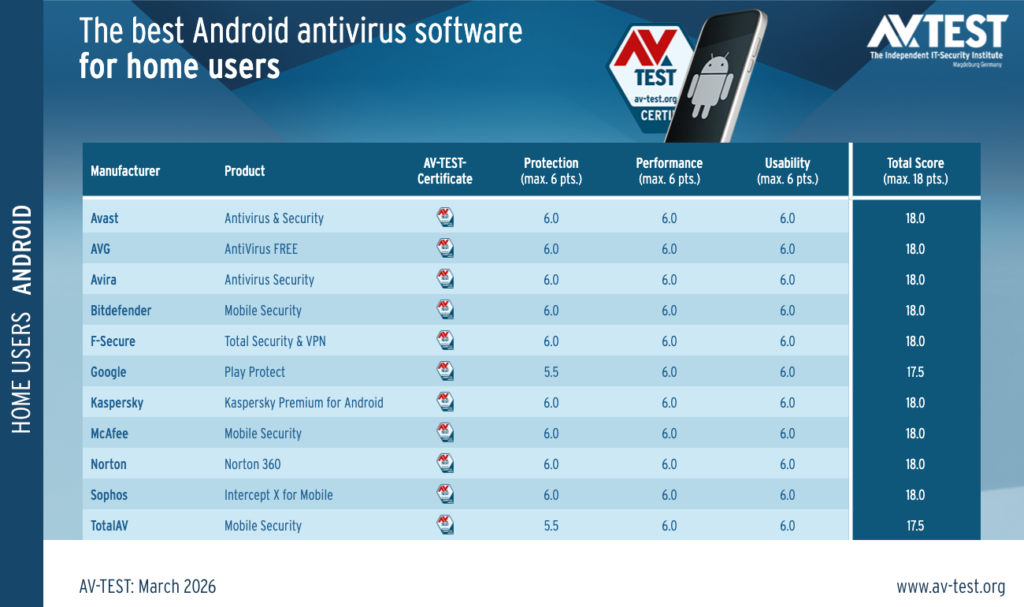
The March review featured a mix of legacy titans and modern security innovators. The 11 products tested include:
- Avast Antivirus & Security
- AVG AntiVirus FREE
- Avira Antivirus Security
- Bitdefender Mobile Security
- F-Secure Total Security & VPN
- Google Play Protect
- Kaspersky Kaspersky Premium for Android
- McAfee Mobile Security
- Norton Norton 360
- Sophos Intercept X for Mobile
- TotalAV Mobile Security
As mobile devices are increasingly used to access enterprise AI agents and sensitive cloud workloads, the choice of a security app is no longer just a personal preference; it is a governance decision.
While Google Play Protect provides a baseline of safety for billions, the AV-TEST results highlight where third-party suites offer the decisive edge in advanced threat detection and identity protection. For organizations operating in 2026, the goal is to move beyond passive scanning toward active resilience.